

Best AWS Consulting Partners in Türkiye: How to Choose the Right One
For an enterprise building on AWS, Amazon Web Services gives you the engine. The partner you hire decides whether that engine moves your business forward or burns through your budget while everyone insists the project is going fine.
Choosing an AWS partner is a high-stakes, low-frequency decision, and the cost of getting it wrong tends to surface eighteen months later, long after the contract is signed. That is the reality behind a decade of enterprise migration.
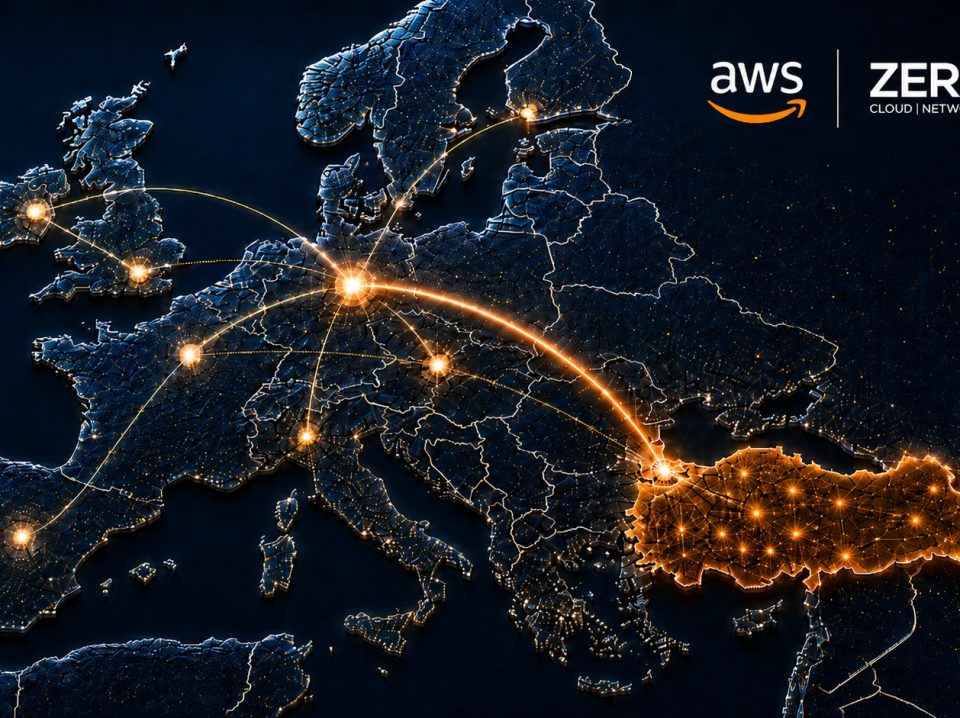
In Türkiye, where the cloud market is expanding faster than expected and where regulation cuts in directions that surprise foreign vendors, that choice carries unusual weight.
Why the Turkish Market Changes the Calculation
Türkiye’s cloud computing market was valued at roughly USD 2.92 billion in 2025, projected to reach USD 11.13 billion by 2031 at a 24.98% CAGR. That is a market doubling itself and then some, inside a single planning horizon.
The infrastructure beneath that growth is expanding in parallel. Türkiye’s data center market climbed from about 1.47 billion dollars in 2020 to roughly 2.49 billion dollars in 2025, with Istanbul holding around 65 percent of national capacity. The country is positioning itself as a regional digital hub, and the demand for skilled hands to manage that transition is outpacing supply.
Here is where it gets specific. Türkiye is not a frictionless cloud market, and any partner who treats it like one will eventually cost you.
Under Law No. 6698 on the Protection of Personal Data, known as KVKK, Turkish banks, public institutions, and payment and electronic money institutions are required to keep their primary and secondary data systems inside Turkey. Social network providers must retain Turkish user data locally as well. Cross-border transfers were further tightened by the Regulation on Cross-Border Personal Data Transfers.
These localization rules mean a partner advising a Turkish bank cannot simply lift workloads into the nearest convenient AWS region and call it done. A server in Frankfurt still counts as “abroad” under KVKK, no matter how fast the connection.
That is why AWS’s Istanbul Local Zone matters. In May 2026, AWS announced the general availability of the new Local Zone, bringing AWS infrastructure closer to end users in Turkey and allowing organizations to store and back up certain data locally. The launch marks the first time Amazon S3 and Amazon EBS Snapshots are available in AWS Local Zones in EMEA, meaning organizations can store, process, and retrieve objects locally, with EBS Snapshots providing fast, in-country backup and recovery.
For regulated industries, this changes what “possible” looks like. But it does not make the localization question disappear, as the Istanbul Local Zone is not a full AWS Region. Each Local Zone is a child of a parent region and is managed through that parent region’s control plane, Frankfurt in this case. A partner now has to know precisely which workloads and data can live in Istanbul, which must run in Frankfurt, and how KVKK applies across that split. The architecture has to respect localization rules that global playbooks often ignore.
Understand What an AWS Partner Badges Actually Means
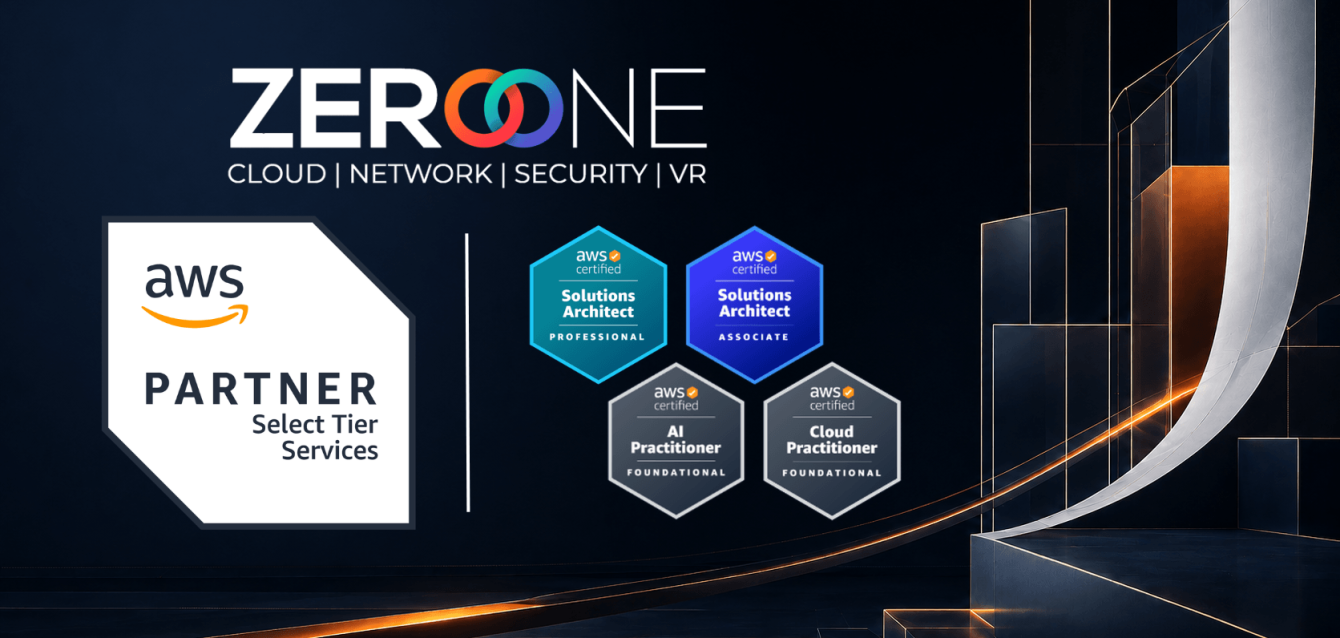
Before you compare vendors, you need to understand the language they use to describe themselves. AWS recognizes consulting partners through a structured system of tiers. These badges can be useful signals. They show that a company has met AWS requirements around training, customer experience, and technical validation.
AWS organizes services partners into three tiers: Select, Advanced, and Premier. The tiers reflect rising levels of certified staff, completed customer engagements, and demonstrated customer satisfaction. Premier sits at the top and is meant to identify partners with deep, broad, proven capability. But the badge is not the whole story.
A tier or specialization can tell you that a partner has passed a formal bar. It does not automatically tell you whether the people assigned to your project have handled your type of environment, your regulatory constraints, or your business risk. A strong AWS consulting partner needs more than a logo on a website.
The right partner may have a formal AWS tier or specialization. They may also be a focused local team with deep hands-on experience, strong certified engineers, and a better understanding of your operating reality than a larger name. What matters is whether they can prove they are right for the work in front of you.
The Questions That Separate Real Partners From Resellers
Separating a genuine engineering partner from a glorified reseller starts when the conversation moves past the pitch and into the details.
1. How many AWS-certified engineers will actually touch my account?
Note the word actually. Companies love to quote their total certified headcount. You care about the people assigned to you. Ask for names, certification levels, and whether the senior engineer in the pitch will still be present during execution. The gap between the team that sells and the team that builds is where many projects quietly go wrong.
2. Walk me through a migration you ran for a company like mine, in Türkiye.
Local proof is non-negotiable here. A migration for a Turkish financial institution carries data localization obligations that a migration for a US retailer does not. You want a case study with a comparable industry, a comparable regulatory profile, and ideally a comparable size. Ask what broke, how they fixed it, and what they would do differently.
3. How will you keep me compliant with KVKK and sector-specific rules?
A partner who understands the Turkish landscape will speak fluently about primary and secondary data system localization, and how those constraints shape architecture decisions.
4. What does your cost optimization practice look like after go-live?
The migration is the beginning, not the finish. Cloud spend has a way of drifting upward once the initial project closes and attention moves on. A serious partner has a FinOps discipline: a repeatable method for surfacing idle resources, right-sizing instances, and matching commitments such as Savings Plans and Reserved Instances to your real usage. Ask how they measure the savings they deliver and how often they report them.
5. Who owns the architecture decisions, you or me?
The right answer is a partnership with clear documentation, not a black box. You should never finish a project unable to understand or operate what was built. Insist on knowledge transfer, runbooks, and architecture documentation as contractual deliverables. A partner reluctant to make you self-sufficient is protecting their lock-in, not your interests.
6. How do you handle disaster recovery and business continuity?
Push past the brochure. Ask about recovery time objectives and recovery point objectives, the RTO and RPO, and how their proposed design meets the targets your business actually requires. A partner who designs to specific, measured continuity goals is operating at a different level from one who waves at the concept.
7. What happens when something goes wrong at three in the morning?
Support structure tells you who you are really hiring. Clarify response times, escalation paths, whether support is local or routed through distant time zones, and what the engagement looks like during an incident rather than a sales call.
8. Which of my workloads belong in Istanbul, and which belong in Frankfurt?
The Istanbul Local Zone gives Turkish organizations new options for latency-sensitive and residency-sensitive workloads, but it is not a full AWS Region. Some services and data can sit closer to users in Turkey; others still need the depth of the Frankfurt Region. A competent partner can walk you through a workload placement map: what runs locally for latency and residency, what runs in Frankfurt for the full service portfolio, and how the two halves connect.
When to Walk Away
- A partner who promises a fixed price before understanding your environment is guessing, and you will pay for the guess. Cloud migrations depend on the state of your existing systems, and credible estimates follow discovery, not precede it.
- A partner who cannot name a comparable Turkish client is asking you to be their learning experience. That can be acceptable if you negotiate the price down to match the risk.
- A partner who treats compliance as an afterthought, or who seems unaware of localization requirements for regulated industries, is a liability in a market where the data protection authority has taken an active enforcement posture. Fines for breaches are real and meaningful.
- And be wary of the partner who wants to keep you dependent. If they resist documentation, dodge knowledge transfer, or structure the relationship so you can never operate without them, they have told you exactly what kind of partner they intend to be.
Migration Strategy Is Where Partners Are Choosen
The clearest test of a partner’s depth is how they think about the migration approach. There is no universal right answer.
- Lift-and-shift, also called rehosting, moves your workloads to AWS with minimal change. It is fast and lower in upfront effort, and for many enterprises it is the sensible first move. The trade-off is that you carry your old inefficiencies into the new environment, and you may pay for them on the cloud bill until you optimize later.
- Re-platforming makes targeted improvements during the move, such as shifting a self-managed database to a managed service, capturing some cloud benefit without a full rebuild.
- Re-architecting rebuilds applications to be cloud-native. It is the most demanding path and the most expensive in time and effort, and for the right workload it delivers the deepest long-term gains in scalability and cost.
- The Istanbul Local Zone adds a fourth dimension to this conversation. For organizations that are held back from migration because of residency rules, the Local Zone brings AWS compute, networking, and local storage capabilities to Türkiye, helping you securely store and process data in-country while reducing latency to end users. A partner will now sequence a migration in three tiers rather than two: workloads that go to the Frankfurt region, workloads that must stay in-country in the Local Zone, and workloads that stay on-premises.
A skilled partner assesses each workload and recommends a mix, sequencing the easy wins early and reserving the heavy lifts for systems that justify them. When you ask about strategy and hear a single approach pitched as the answer to everything, you are talking to someone selling a product rather than solving your problem.
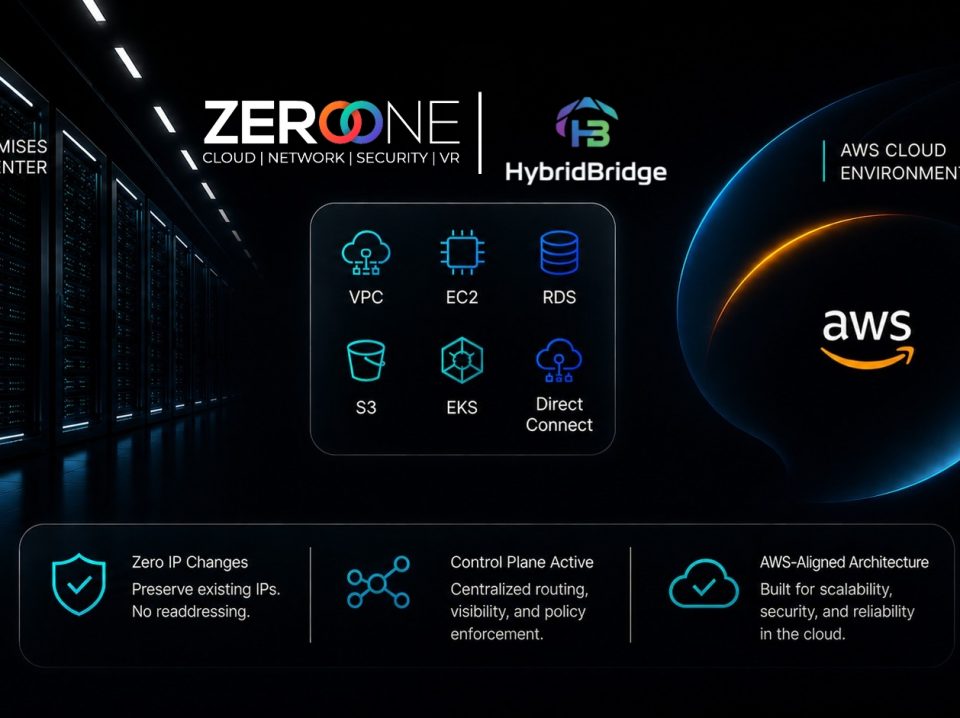
The same discipline applies to network continuity. A phased migration means your data center and AWS environment coexist for a period, and the connectivity choices among VPN, Direct Connect, and Transit Gateway carry real consequences for performance and cost. A partner who can explain those trade-offs against your specific traffic patterns is one who has done this before.
Making the Decision
So how do you make the right call? Can this partner prove they have the AWS experience my project actually needs? Can this partner prove delivery for a company like mine, in Türkiye, under the regulations I answer to? Do they have hands-on experience with the Istanbul Local Zone and can they articulate exactly where its service catalog ends and Frankfurt begins? Will they make my team stronger and more self-sufficient, or more dependent on them? And when the inevitable hard moment arrives, will they be in the room?
The Turkish cloud market is growing year over year, and the pressure to move quickly is real. But speed without the right guide is how organizations end up migrating twice, paying for the lesson the second time around. The partner you choose is the difference between cloud as a competitive advantage and cloud as an expensive disappointment.
Choose for proven capability. Choose for local fluency. Choose for the relationship you will need long after go-live. Get that right, and the technology takes care of itself.
Build the Right AWS Foundation in Türkiye
Choosing the right AWS consulting partner is ultimately about trust earned through architecture, compliance, cost, continuity, and the handover that lets your team operate with confidence. Zero1 Technology helps enterprises in Türkiye design secure AWS foundations, plan migrations with less operational risk, and build cloud environments that are ready for the realities of regulated, business-critical operations.
Explore Zero1’s Cloud Solutions for AWS landing zones, migration, disaster recovery, and cloud governance. For the controls that make cloud adoption safer, Zero1’s Security Solutions offer identity, Zero Trust, cloud security posture, and compliance hardening. For the connectivity layer between data centers, branches, and cloud environments, Zero1’s Network Solutions support resilient hybrid and multi-cloud architecture. For organizations that need long-term support after go-live, Zero1’s Managed Services provide 24/7 operations across cloud, network, and security environments. And if your migration is constrained by legacy IP dependencies or hybrid connectivity challenges, HybridBridge is built to make phased cloud migration safer and more predictable.
If AWS is part of your next stage of growth. Talk to Zero1 about the architecture, compliance, cost, and operational decisions that will shape your cloud environment long after go-live.
Frequently Asked Questions (FAQs)
Start by looking beyond company size and AWS partner badges. The strongest partner for your business should be able to demonstrate relevant AWS experience, provide examples of comparable projects in Türkiye, and explain how they will address compliance, security, cost management, and business continuity. You should also confirm which certified engineers will work directly on your account and what support will be available after the migration is complete.
AWS partner tiers indicate that a company has met specific requirements related to technical certifications, customer experience, completed engagements, and overall AWS capability. Premier is the highest services tier, followed by Advanced and Select. These designations are useful credibility signals, but they should not replace proper due diligence. A partner’s tier does not guarantee that the team assigned to your project has experience with your industry, workloads, or regulatory obligations.
Türkiye has data protection and localization requirements that can affect where certain systems and information may be stored or processed. This is particularly important for banks, public institutions, payment providers, and other regulated organizations. An experienced local AWS partner should understand KVKK, sector-specific requirements, and the practical implications of dividing workloads between on-premises infrastructure, the AWS Istanbul Local Zone, and the Frankfurt Region.
The right strategy usually combines several approaches. Rehosting can move suitable workloads quickly with minimal changes, while re-platforming introduces targeted improvements such as managed databases. Re-architecting may be appropriate for applications that need greater scalability, resilience, or long-term efficiency. A capable AWS consulting partner will assess each workload individually rather than applying the same migration method to every system.
Post-migration support should include more than basic technical troubleshooting. Look for ongoing monitoring, security management, incident response, cost optimization, capacity planning, backup testing, and disaster recovery reviews. The partner should also provide clear documentation, operational runbooks, knowledge transfer, and defined escalation procedures so your internal team can manage the environment confidently without becoming unnecessarily dependent on the provider.
Zero1 Technology helps enterprises in Türkiye plan, migrate, secure, and operate AWS environments with a focus on compliance, resilience, cost control, and long-term manageability. Its capabilities span AWS landing zones, cloud migration, disaster recovery, governance, cybersecurity, hybrid connectivity, and 24/7 managed services. Zero1 can also support phased migrations where legacy systems, data residency requirements, or network dependencies make a full cloud move impractical.