

Introduction
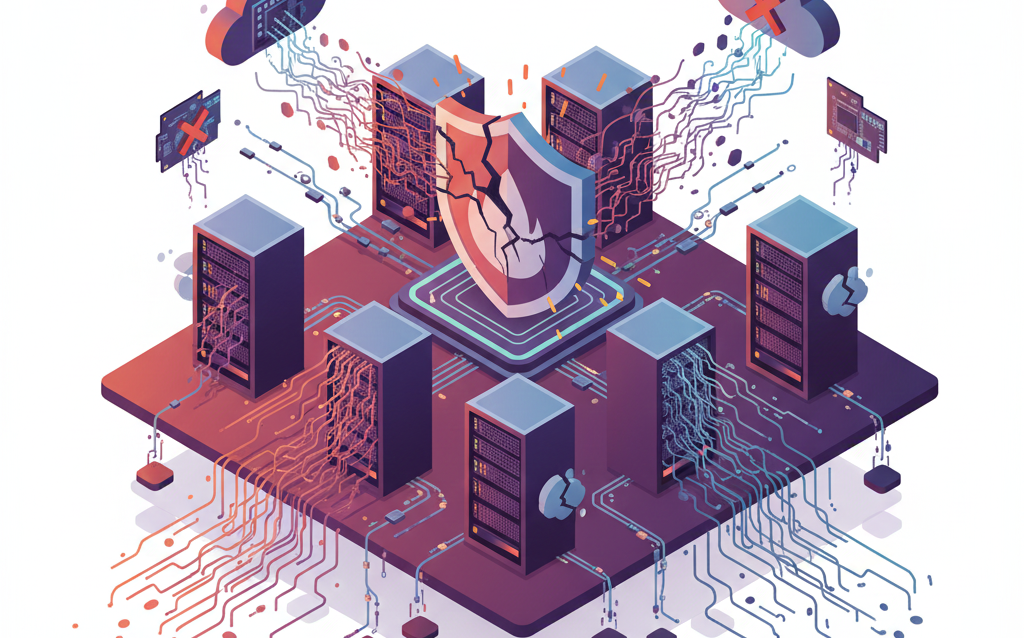
Cloud platforms promise speed, flexibility, and scale. Yet in large enterprise environments, cloud initiatives often reach a point where progress slows — or worse, becomes increasingly difficult to manage.
In our experience, this rarely happens because of cloud technology limitations. It happens because cloud environments are deployed without the network and security foundations required to support enterprise-scale operations.
At small scale, these gaps may go unnoticed. At enterprise scale, they become impossible to ignore.
The Early Success Trap
Many organizations start their cloud journey with focused objectives:
-
Migrate a limited number of applications
-
Reduce data center footprint
-
Enable faster development cycles
Initially, these efforts often succeed. However, as environments expand, a familiar pattern emerges: cloud accounts grow without consistent structure, connectivity models vary, and operational visibility decreases.
Network Blind Spots Appear First
One of the earliest pressure points we encounter is network architecture. Without a clearly defined hybrid network foundation, enterprises face:
-
Inconsistent routing between on-prem and cloud
-
Latency and performance issues that are difficult to diagnose
-
Ad-hoc connectivity decisions that accumulate technical debt
At scale, networks are not just transport layers — they are control mechanisms. When they are not designed intentionally, cloud environments become harder to secure and operate.
Security Gaps Are Harder — and Costlier — to Fix Later
Security challenges often surface after network complexity increases. Identity models that differ between environments and logging that lacks central visibility become major hurdles.
Security tools cannot compensate for architectural gaps. Without a coherent identity, network, and governance model, security remains fragmented — regardless of how many tools you add.
Architecture Must Come Before Acceleration
A sustainable model is to design network and security foundations before cloud adoption accelerates. This includes:
-
Defined hybrid network topology
-
Identity-centric access controls
-
Centralized logging and monitoring
-
Governance models that scale with growth
When these elements are embedded early, cloud environments remain manageable as they evolve.
Final Thought
Cloud transformation fails at scale not because organizations move too slowly — but because they move too fast without foundations.
Enterprises that treat cloud as part of a unified architecture, anchored on network and security principles, are far better positioned to scale confidently and sustainably.